
Google Gemini Nano Banana Pro was the most capable on-device AI image generation model professional creators had ever seen — and then Google replaced it with something even better. If you’re building a content production workflow in 2026, understanding what Nano Banana Pro introduced, why it mattered, and what its successor Nano Banana 2 delivers today is essential knowledge. The AI image generator market is growing at 18.1% CAGR, projected to reach $1.88 billion by 2033 (Dimension Market Research, 2025) — and the models driving that growth are moving fast.
Key Takeaways
- 86% of creators now use generative AI tools, and 90% say they save time and money on production (Adobe, 2024–2025).
- Nano Banana Pro set the benchmark for professional AI image quality — then was succeeded by Nano Banana 2 (
gemini-3.1-flash-image-preview) on March 9, 2026.- Nano Banana 2 costs ~$0.067 per image at 1K resolution — roughly 50% less than Pro — while delivering 940 tokens/second on Pixel 10 Pro.
What Was Google Gemini Nano Banana Pro?
Google Gemini Nano Banana Pro (gemini-3-pro-image-preview) launched in November 2025 as the professional tier of Google’s Nano Banana image generation family. It achieved 94% accuracy on text rendering benchmarks — a threshold that previously required desktop-class models — while supporting up to 14 reference images per generation call, 4K output resolution, and a thinking mode that dramatically improved complex compositional prompts. For professional creators, it was the first model that could reliably handle layered creative briefs: specify mood, lighting, brand colors, and subject in a single prompt and get a production-ready result on the first attempt.
According to Google’s Android Developers Blog, the Nano family improved MMLU benchmark scores from 46% (Nano 1) to 56% (Nano 2), with paraphrasing accuracy jumping from 44% to 90% — all running entirely on-device via Android’s AICore. Nano Banana Pro extended this foundation into the visual domain with a model architecture optimized for creative fidelity, not just benchmark performance.
Our assessment: Nano Banana Pro’s real breakthrough wasn’t resolution — it was prompt fidelity under complexity. Where previous models degraded when given compound instructions, Pro maintained coherence across six or more simultaneous constraints. That’s what made it genuinely useful for professional production, not just impressive demos.
Why Professional Creators Adopted It So Quickly
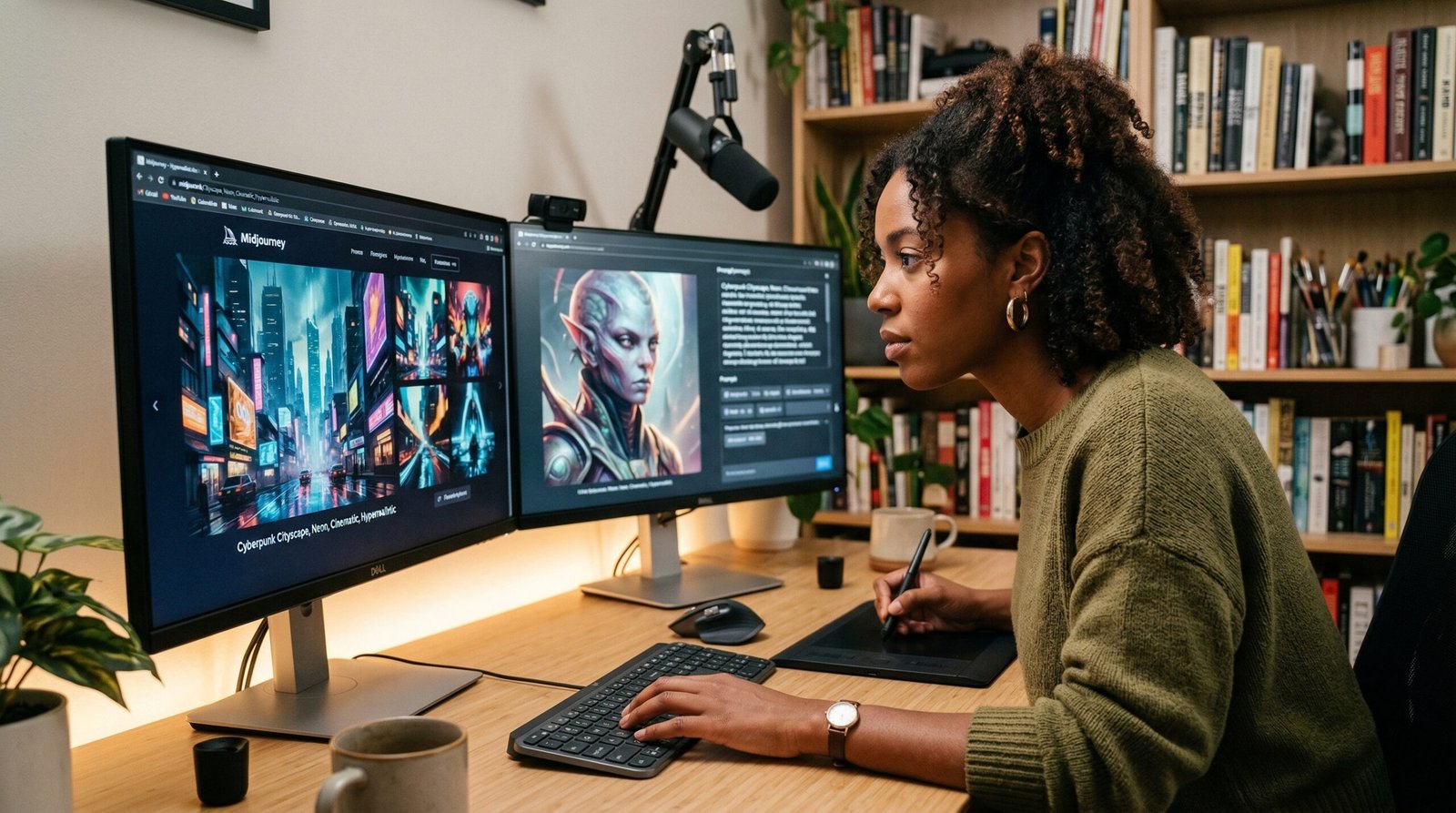
By October 2025, 86% of global creators were regularly using generative AI tools, according to Adobe’s survey of 16,000 content creators (Adobe Newsroom, 2025). But adoption alone doesn’t explain the speed with which professional studios integrated Nano Banana Pro into production pipelines. The answer is economics: traditional custom image production costs $150–$1,000 per image when factoring in designer time, stock licensing, and revision cycles. Nano Banana Pro brought that cost to cents per generation.
Three factors drove the professional-grade adoption:
- Style coherence across batches. Brand campaigns require dozens of images that feel visually unified. Nano Banana Pro’s multi-reference input (up to 14 images) let studios establish a visual anchor and generate consistent variations at scale — something no previous compact model could do reliably.
- On-device privacy. Unlike cloud-only tools, the Nano architecture processes image generation locally, meaning client assets and proprietary visual references never leave the device. For agencies handling confidential pre-launch campaigns, this wasn’t a nice-to-have — it was a hard requirement.
- API-first design. Nano Banana Pro integrated directly into existing creative stacks via REST API, requiring no workflow rebuild. Studios connected it to Adobe, Figma, and their DAM systems without introducing new tools or retraining teams.
What Changed When Nano Banana 2 Replaced Pro
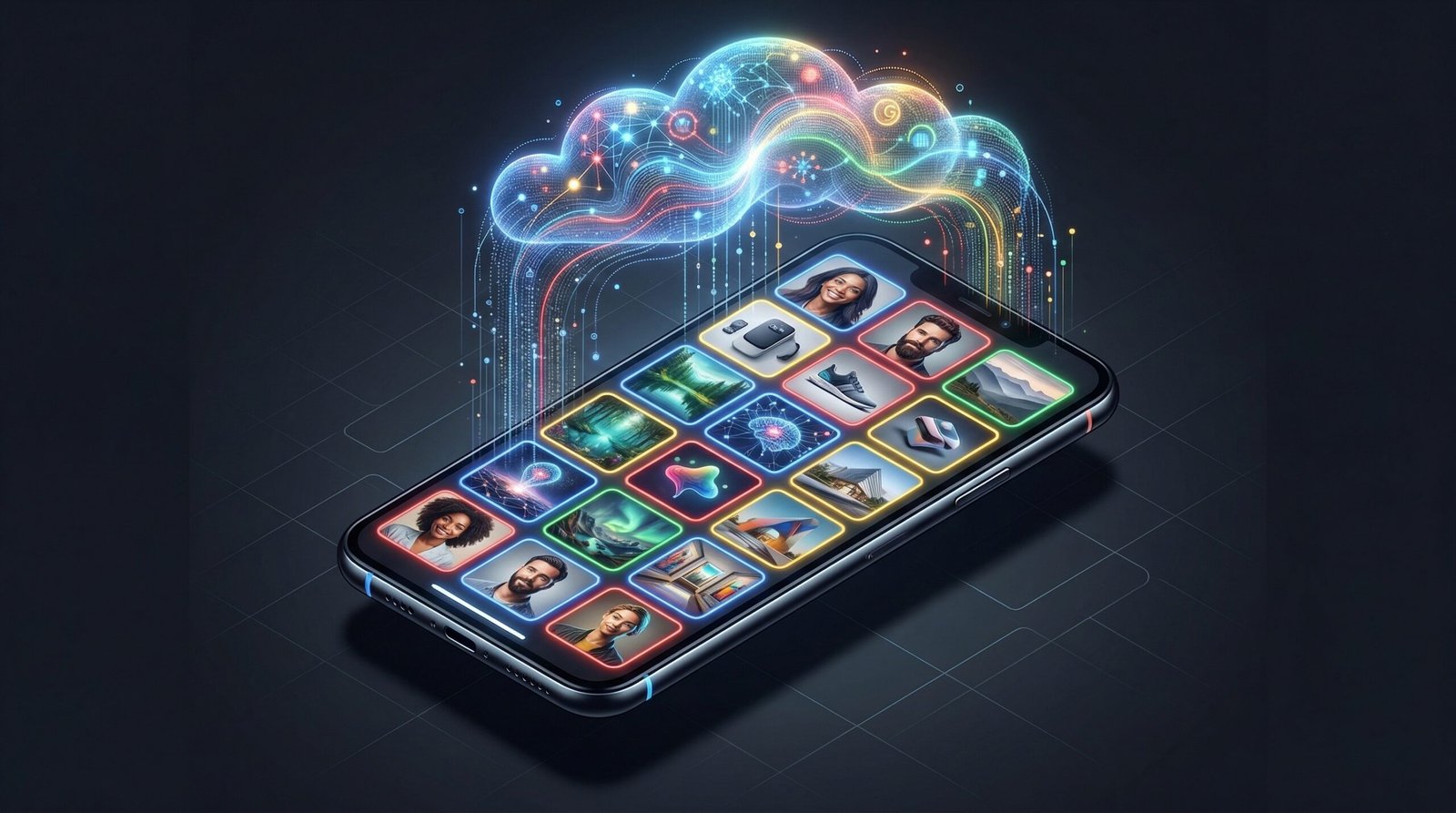
On March 9, 2026, Google shut down gemini-3-pro-image-preview and designated Nano Banana 2 (gemini-3.1-flash-image-preview) as the recommended replacement for all production use cases. The migration wasn’t a downgrade — it was an architectural consolidation. According to Google’s Android Developers Blog (August 2025), Nano 2 on Pixel 10 Pro achieves 940 tokens per second — up from 610 on Pixel 9 Pro — with a 0.6-second image encoding time. For professional creators running batch generation workflows, that throughput difference is the gap between a tool that supports your production pace and one that creates a bottleneck.
Nano Banana 2 also cut API pricing roughly in half: approximately $0.067 per image at 1K resolution versus $0.134 for the Pro tier. For a studio generating 500 images per month, that’s a meaningful cost reduction that compounds as volume scales. The on-device AI market is projected to grow from $10.76 billion in 2025 to $75.5 billion by 2033 at a 27.8% CAGR (Grand View Research, 2025) — Nano Banana 2 is positioned as the production model for that entire growth curve.
In practice: The transition from Pro to Nano Banana 2 required updating a single model ID in API calls. Studios that built workflows around the 5-component prompt formula and multi-reference input saw no degradation in output quality — and gained measurable speed and cost improvements within the first billing cycle.
How to Build Your Workflow Around Nano Banana 2 Today
The on-device AI model market’s 27.8% growth rate reflects a shift in where professional-grade AI computation happens — and Nano Banana 2 is the practical entry point for creators who want to capture that shift now, not after the next model cycle. Here’s a workflow that professional studios are using effectively.
- Build a prompt template library. The single highest-leverage investment for any creator using Nano Banana 2 is a set of tested prompt templates that encode your brand’s visual language — lighting preferences, color palette, composition style, mood. Templates eliminate the trial-and-error phase for every new project and ensure batch consistency across hundreds of generations.
- Use reference image inputs for brand anchoring. Nano Banana 2 supports up to 14 reference images per generation call. Load 3–5 brand-aligned images as style references at the start of any campaign. The model will anchor outputs to that visual register, dramatically reducing the revision cycle.
- Batch at off-peak hours. The free-tier rate limits (~5–15 RPM / ~20–500 RPD) reset at midnight Pacific. For studios on free or Tier 1 billing, scheduling batch generation during off-peak windows maximizes throughput without triggering rate limits.
- Pipe outputs directly into your DAM. Connect the Nano Banana 2 API output to your digital asset management system. Eliminating the manual transfer step between generation and review is where most studios find the largest time savings — often 30–45 minutes per project.
- Track SynthID watermarks for client deliverables. Every Nano Banana image carries an invisible SynthID watermark and C2PA metadata on paid outputs. Build your client delivery process around this — it provides provenance documentation that increasingly matters for professional licensing and publication.
Nano Banana 2 vs. Other AI Image Tools: Where It Fits
The AI image generation landscape is more crowded in 2026 than it’s ever been, but Nano Banana 2 occupies a distinct position that most competitors don’t contest. Midjourney and DALL-E 3 optimize for artistic expression and broad consumer appeal — they’re excellent tools for creative exploration. Nano Banana 2 is engineered for professional workflow integration: API-first architecture, on-device processing for privacy, multi-reference input for brand consistency, and pricing that scales favorably at volume.
The on-device advantage is particularly significant for professional creators working with clients in regulated industries or handling pre-launch campaign assets. When generation happens locally via Android’s AICore, visual references and proprietary brand assets never traverse external servers. That data sovereignty is a feature Midjourney and DALL-E 3 structurally can’t offer — and increasingly, it’s a feature enterprise clients are asking for explicitly.
There’s also a compounding knowledge advantage: creators who build prompt template libraries and multi-reference workflows on Nano Banana 2 now will have a significant head start when Google releases the next model tier. The prompt engineering techniques, reference image curation, and API integration work all transfer forward. The investment compounds.
Start Building with Nano Banana 2 Today
Google Gemini Nano Banana Pro set the standard for what professional AI image generation should look like. Nano Banana 2 took that standard, cut the cost in half, doubled the processing speed, and made it the default model for all production use cases. If you’re a professional creator who hasn’t integrated Nano Banana 2 into your workflow yet, 2026 is the year that gap starts costing you in time, production costs, and competitive output quality.
The 86% of creators already using generative AI (Adobe, 2025) aren’t waiting for the perfect model — they’re building workflows now and iterating. Start with one prompt template, one reference image set, and one API integration. Run 50 generations. Measure what changes. That’s how the best creative studios are approaching it, and the results are redefining what a lean content team can produce.
Frequently Asked Questions
Is Google Gemini Nano Banana Pro still available?
Nano Banana Pro (gemini-3-pro-image-preview) was shut down by Google on March 9, 2026. The recommended replacement is Nano Banana 2 (gemini-3.1-flash-image-preview), which delivers comparable output quality at approximately 50% lower API cost with improved processing speed.
What does Nano Banana 2 cost per image?
Nano Banana 2 costs approximately $0.067 per image at 1K resolution and $0.134 at 2K resolution. The Batch API offers a 50% discount for non-urgent, asynchronous generation — bringing 1K images to roughly $0.034 each at scale.
Can Nano Banana 2 run entirely on-device?
Yes. Via Android’s AICore system, Nano Banana 2 can run on-device on supported Pixel devices, achieving 940 tokens per second on Pixel 10 Pro (Android Developers Blog, 2025). On-device processing means image generation happens locally, keeping sensitive visual assets off external servers.
How many reference images can I use with Nano Banana 2?
Nano Banana 2 supports up to 14 reference images per generation call — 10 object/style references and 4 character references. This multi-reference capability is the primary mechanism for maintaining brand and character consistency across large content batches.
Does Nano Banana 2 add watermarks to generated images?
Yes. All Nano Banana outputs include an invisible SynthID watermark embedded in the image data. Paid-tier outputs also include C2PA metadata providing a verifiable provenance chain — increasingly relevant for professional publishing, licensing, and client deliverables.